
Call the LionHeart Helpline

UK: 0800 009 2960 or +44 (0)121 289 3300

Request a callback

Close

5 ways to wellbeing this New Year
collage 1
2026-01-02

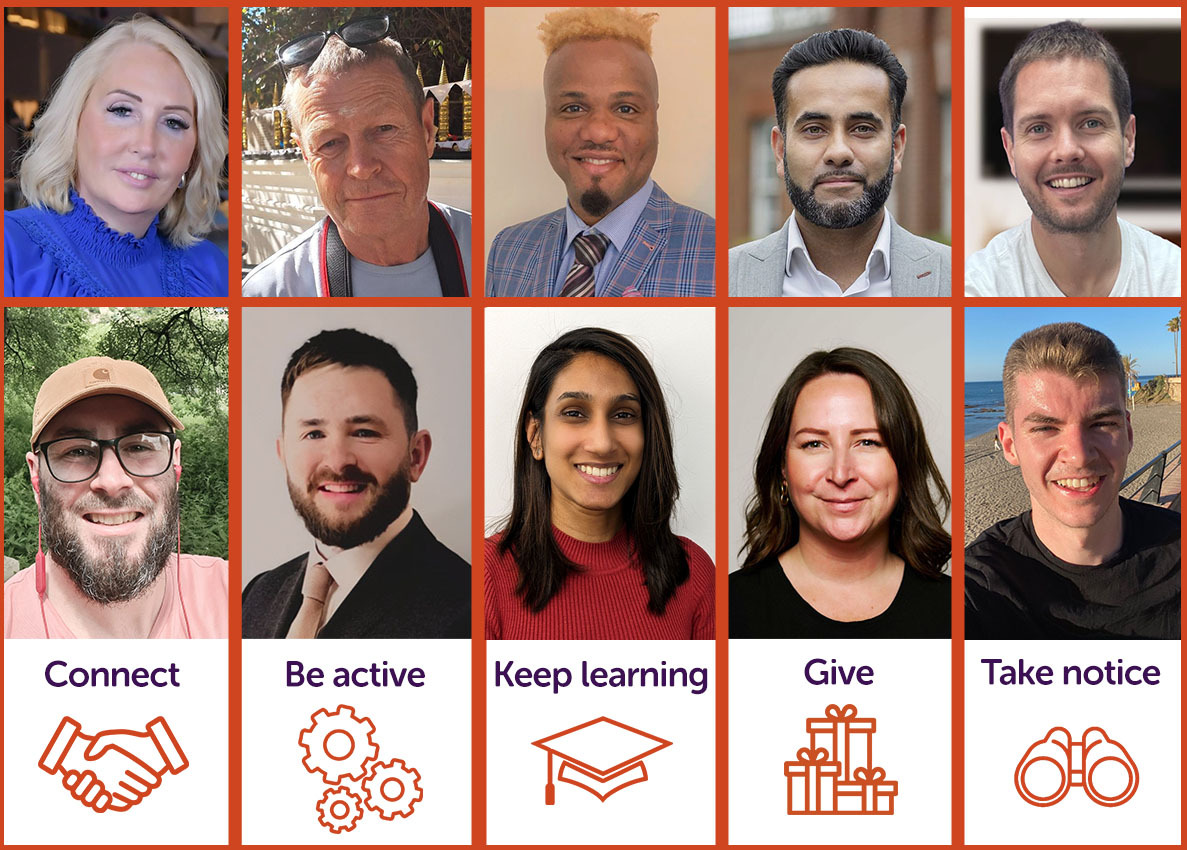
Health experts reckon that there are five key steps you can take to improve your mental health and wellbeing - so why not give them a go this January? We asked some of the LionHeart ambassadors to share how they incorporate them into their daily lives…  

Connect (with other people) 
Good relationships are important for your mental wellbeing. They can:

  • help you to build a sense of belonging and self-worth
  • give you an opportunity to share positive experiences 
  • provide emotional support and allow you to support others 

 Whether through a midweek 7-a-side match under the floodlights, a winter hike, or a coffee catch-up, I find that staying connected with friends can make a tough week feel manageable.
It gives me perspective, lifts my mood, and reassures me I don’t have to face things on my own." 
Kim Lydon 

 "I have had struggles in my life and needed to reach out for help to organisations and groups in the past. By doing this I was able to find like-minded people who understood me and what I had been through. I am now part of a community of people and we connect daily, which really helps you to not feel alone.
Knowing that you are part of a community of people who care for each other - whether that be family, friends colleagues or neighbours - really does help your health and wellbeing.
As humans we were built for community, not isolation."
Karen Still
 

Be active 
Being active is not only great for your physical health and fitness, but evidence suggests it can also improve your mental wellbeing by: 

  • raising your self-esteem 
  • helping you to set goals or challenges and achieve them 
  • causing chemical changes in your brain which can help to positively change your mood  

I find being active helps to protect my mental health and is fundamental to my overall wellbeing. Whenever I can (and it's non-negotiable when I have a big day ahead) I always kickstart it with an intense workout first thing in the morning. I can literally feel the oxygen pumping around my body, clearing the mental fog and putting me in the right frame of mind. 
If I ever feel sluggish or need clarity, being active is my reset.” 
Scott Pearshouse
 

“I was in a quite a dark place mentally and couldn't really see a way forward. Hockey has been my sport, even now at 67, and I was advised to get back to playing as soon as I could after Covid restricted playing.
After each game, I felt so much better and stronger in myself, both mentally and physically (even if a little tired!) and, the funny thing is, it didn't depend upon the result. Now that I am in a much better place this hasn't changed.

I’ve now gone one step further with additional exercise to help lose some weight and find I feel better most of the time, not just after activity. It’s greatly improved my wellbeing."
Graham Munday

Keep learning 
Research shows that learning new skills can also improve your mental wellbeing by: 

  • boosting self-confidence and raising self-esteem 
  • helping you to build a sense of purpose 
  • helping you to connect with others  

“Recently, rediscovering old interests has greatly supported my wellbeing. I started reading fiction books again, which has helped me reconnect with my love of reading. The added challenge of reading in French has also allowed me to keep learning and engage my mind in a different way.
I have also returned to baking after many years. It has been a pleasant and grounding experience and something that allows me to enjoy a creative activity I have always loved.
It’s reminded me how powerful it can be to revisit old hobbies and continue learning in simple yet meaningful ways." 
Heshna Apadoo

 Taking on a new role as a head coach of a youth football team has been really rewarding. I’ve learnt to teach drills, demonstrate tactics and prepare for games but also enjoyed the connection with both kids and parents alike.
It teaches growth, sometimes through disappointment like losing a game. Having a team of 25 under-nines and their families relying on me has been a learning curve but watching them develop and grow in confidence has given me a tremendous sense of belonging, purpose and a boost to my own wellbeing.”  
Roy Albert 

Give 
Research suggests that acts of giving and kindness can help improve your mental wellbeing by: 

  • creating positive feelings and a sense of reward 
  • giving you a feeling of purpose and self-worth 
  • helping you connect with other people 

“In recent years, taking time to mentor others hasn’t just helped them grow, it’s completely strengthened my own sense of purpose. Mentoring is a two-way street: while I share my experience and guidance, I also reinforce my own skills and gain fresh perspectives.
“It’s helped in strengthening my empathy, practising gratitude and reminds me of the value human connection in our industry."
Michaela Tweedley 

Giving is a cornerstone of wellbeing and a principle deeply rooted in my belief. For me and many others the purpose of giving reflects our commitment to serving others by contributing to the community, supporting colleagues, and sharing knowledge across the industry.
Through acts of generosity, whether in time, skills, or resources we honour our faith, strengthen collective wellbeing, and foster a culture of compassion and collaboration that benefits both individuals and the wider society." 
Habibul
Islam

Take notice 
Paying more attention to the present moment can improve your mental wellbeing. This includes your thoughts and feelings, your body and the world around you. Mindfulness can:

  • help you enjoy life more and understand yourself better
  • positively change the way you feel about life and how you approach challenges  

I find I get SAD (seasonal affective disorder) a little bit throughout the winter so I am grateful to live where I do. But if I get up early I notice things like trees in the wind, people moving about, dogs and cats and just generally seeing the world crack on – it makes me feel lucky to see and notice these things, keeping it positive and seeing the good in things and people.”
John Tierney

There was a time when I could not face physical exercise or a journey without some kind of mental stimulation. Now, whenever I am on a walk, run or cycle, I leave my headphones at home. Taking in the sounds of nature allows me to be in the present moment, relax, and gives me time and space to reflect.
Train journeys would always be a time to engage with either my laptop or phone – trying to use the time up productively by catching up with work or waste that time away by scrolling. Once I turned these devices off, I began using this time to meditate, noticing the sounds in the carriage just like a thought, and letting them go."
Adam Henderson


Latest Posts

2025
October
24th - 8 ways to self-care in autumn and winter
7th - Becoming Chartered
September
8th - The unimaginable that becomes your reality
July
15th - From ‘referred’ to FRICS
June
26th - How to stop sabotaging your own career
May
22nd - 7 simple steps to get more active this summer
19th - Learning to 'go gently'
March
20th - From the challenges to the joy
February
6th - "My 'weaknesses' are my greatest strength"
2024
December
3rd - Things I learnt about grief this year
November
4th - An 'ask' from the LionHeart chair
October
16th - Understanding OCD – and how therapy can help
10th - The conversations that can change lives
September
16th - Help! I'm a new graduate surveyor!
10th - Starting the conversation around suicide
August
23rd - Do you know your numbers?
July
31st - My dad, the alcoholic
May
24th - Introducing LionHeart's new CEO
9th - Moving more for your mental health
March
21st - Being a surveyor with ADHD
13th - Life after brain injury
February
5th - How youth counselling helped us
2023
November
22nd - Living with an invisible illness
9th - What makes a good trustee?
1st - Things you must do as a final year surveying student!
October
4th - Dyslexia in surveying
September
28th - Reflecting on 12 years at LionHeart
13th - New beginnings and how to embrace them
5th - Losing a sibling to suicide
July
5th - Celebrating one year alcohol-free
April
25th - Caring for someone with MS
20th - How to set boundaries at work
February
17th - 'Calling LionHeart was like being thrown a life jacket'
6th - Spotlight on winter fundraising
3rd - Facing cancer
2022
November
14th - Identifying and dealing with workplace bullying
October
13th - Why make a will?
12th - Living with OCD
3rd - Autism and my road of discovery
September
22nd - Frequently asked questions about LionHeart
August
25th - 25 years of LionHeart
11th - 'Stress caused me permanent disability'
July
18th - Diversifying our board, and why
May
18th - Coaching to unlock a new future
12th - How to help your lonely teen
9th - Asking for help - as the helper
April
28th - Why talking about dying is so important
7th - 9 simple ways to cut stress
March
23rd - Living & succeeding with ADHD
16th - 'I came to see how much of my life was run on adrenaline'
February
10th - "My daughter didn't want to be here any more"
4th - My life-changing cancer diagnosis
January
13th - Reassessing how you drink
4th - Looking to the future
2021
November
19th - How alcohol almost cost me everything
18th - Children's grief and how to help
16th - Alcohol, anxiety and how secrets keep you sick
4th - "I had no idea stress could cause a real physical pain"
October
22nd - 5 ways to get your teen talking
18th - The Positives of Menopause
13th - Baby loss and depression
12th - The pandemic's impact on children's mental health (and what we can do about it)
8th - Don't judge a book - a story of depression and change
5th - LionHeart Back to Work support
September
29th - Post APC submission
16th - How families feel youth mental health
June
24th - 6 top tips if you've been referred
May
20th - Coaching for change
12th - I'd hit absolute bottom - but it was the catalyst to seek help
April
22nd - Spring into action by fundraising for LionHeart
March
4th - Reflecting on university mental health
February
15th - My experiences of counselling
January
20th - Worry Time - and how it helps
18th - My furlough & redundancy journey
13th - Volunteering and LionHeart
2020
November
30th - A road to change
2nd - Trusteeship through lockdown and uncertainty
October
12th - The importance of legacies
10th - Overwhelm - and overcoming it
8th - Lockdown and my mental health
September
28th - Creativity at Work
July
20th - Video
June
24th - 'If I can do it, so can you'
22nd - How to ace your APC interview online
8th - Help! I've been referred... what now?
3rd - Your coronavirus concerns, and how we're helping
May
12th - How coronavirus might be affecting your mental health
12th - Managing health anxiety through Covid-19 - and how we helped Mike
March
31st - Rising to the coronavirus challenge
24th - Keep connecting - in a different way
13th - Demonstrating our impact
February
4th - "Cancer wasn't meant to happen to us"
4th - The Big C and grabbing life
January
30th - My journey as a charity trustee
7th - Top 10 tips for CVs and interviews
2019
December
9th - Grief and loss at Christmas
November
7th - Charity trusteeship
6th - How counselling can help manage stress
October
9th - Living with anxiety and depression
July
10th - How coaching can help
May
16th - Changing attitudes to mental health
15th - The vicious circle of body image & mental health
14th - Social Anxiety & how we can help
April
11th - Life with Parkinson's
March
29th - The one about the Bipolar surveyor...
29th - What is Bipolar?
12th - Memory tips from the training front line
January
22nd - Losing a parent
2018
December
7th - LionHeart's support was a game-changer when I failed APC
August
16th - When the reality of motherhood doesn't quite go to plan
July
10th - The story behind surveying's Sisterhood Summit
2nd - The rollercoaster of being a first-time dad
June
22nd - My father's suicide and what I've learnt
14th - Tips for your RICS APC final assessment interview
7th - Trust in the charity sector
May
21st - Is it really okay to not be okay?
April
17th - Building resilience through your APC
January
8th - 7 ways to get more active this year
2017
December
4th - Coping with loss and grief at Christmas
October
5th - "I was told I might not be cut out to be a surveyor"
September
26th - Resilience, and why we need it
August
21st - APC Revision Top Ten Tips
July
12th - LionHeart on new fundraising code of practice
June
19th - Living with 'invisible' illness
14th - How LionHeart helped us live life
13th - Men's Health Week 2017
May
22nd - Living with panic attacks
18th - Why we must care about work life balance
11th - The chicken-and-egg of mental health and shame
February
2nd - What I learnt from Dry January
January
31st - "My 19-year journey to MRICS is what made me"
5th - Ways to be kind to yourself in 2017
2016
September
7th - Suicide prevention
August
1st - Coping with APC stress
July
13th - "I constantly watch my husband for suicidal signs"
May
26th - Dealing with referral at APC Final Assessment
19th - How mindfulness can help your relationships
18th - "I live, and thrive, with depression"
17th - Men and mental health
16th - Mental health and your relationship
April
26th - Starting out in surveying
March
11th - A happy retirement
February
1st - My Dry(ish) January
January
21st - Spring clean your finances
6th - When to consider couples counselling
2015
December
4th - Having a (financially) healthier Christmas
November
18th - How to help a loved one with an addiction
June
15th - Reflections on the Lionheart Surveyors' Football League season
12th - Carers
10th - How LionHeart can support carers
9th - Desktop Relaxation techniques
May
29th - Techniques to help combat anxiety
20th - Helping a family member with depression
18th - Achievements that make a difference
16th - Five things that may indicate your colleague needs help
11th - Helping during a panic attack