

Stressed out?
Managing stress
Stress is not always a bad thing; it's only when you experience too much of it and for longer periods that it can start to have a negative impact on your life.
Modern working life is busy and there are many factors which can contribute to an increase in your stress levels. Left unchecked, this can lead to further serious mental and physical health problems.
If your stress levels are starting to affect your life in a negative way, please give us a call. Support is tailored for each person, and can include any of the following:
- Someone to talk to regularly and confidentially
- Advice and resources to help you manage stress better
- Counselling from one of our qualified counsellors
- Further support might include legal advice, financial support or help to get back into work, for example
Signs that you are stressed
Modern life can be tough. The pressures that life brings, like financial problems, health and wellbeing, or work-related issues, can all lead to feelings of stress.Feeling that you cannot cope can contribute to physical problems like insomnia, lack of appetite, anxiety, headaches, or having low self esteem.
When you are under stress your body releases stress hormones, often called the "fight or flight" response. If handled properly, once the pressure is over, your body often returns to normal, but being under constant pressure can lead to further health problems.
Could you use some help to work through your stress? Our experienced support officers and counsellors can all offer one to one support to help manage stress.
- Click here to see upcoming webinar schedule and book
- You can also find pre-recorded health and wellbeing subjects in our webinar library
Useful resources:
Take two minutes to breathe
One of our counsellors talks you through a simple mindfulness exercise


 With the multiple demands of modern life, a recent survey found one in five workers feel stressed more days than they don't - and half are close to burning out altogether. This one-hour webinar will help you understand the signs and triggers of burnout and what you can do to avoid it.
In the first of 4 ‘coffee break’ stress awareness sessions, we’ll explore somatic practices - simple mind-body techniques that can help ground you and release tension and stress. |
How can ‘belly breathing’ activate the nerve in your body that triggers a relaxation response and lowers stress levels? This coffee break session with one of our counsellors will teach you some introductory techniques. |
Stress can activate a fight-or-flight response but there are ways to help you control that. Learn some simple mindful and grounding techniques that will help you stay calm under fire, in this coffee break length session. |
Learn how this counselling technique can help you to recognise and respond more calmly to stressful situations and triggers, in this stress awareness coffee break session with one of our counsellors. |
 | |
 | Podcast: Stress in the Workplace LionHeart host Jo Grant is joined by ambassador Derek Carter who - one Friday the 13th - experienced such worrying symptoms that it was initially thought he’d had a heart attack. It wasn’t until a doctor asked him, ‘do you think you are stressed?’ that the jigsaw pieces fell into place. |
 | Podcast: Overwhelm and Burnout LionHeart host Melissa Gough-Rundle is joined by support officer and qualified coach Clare Davis to talk about the huge issue of overwhelm and burnout we see time and again among the surveyors we support. Ever feel like you’re sliding backwards down a hill – even though you’ve been giving it everything you’ve got to climb up it? |
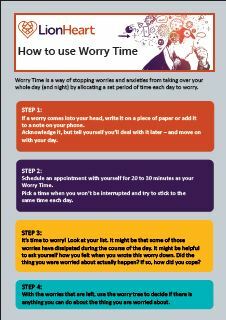 | Although it might sound counter-intuitive, 'Worry Time' is often recommended by our counsellors as a way of stopping worries and anxieties from taking over your whole day (and night) by allocating a set period of time each day to worry. |