5 things to understand about grief

It's an unfortunate fact of life that we will all lose someone we love at some point. Bereavement and loss affects everyone but, despite this, we're often spectacularly ill-equipped to cope with our own, or other people's, grief.
Grief Awareness Week, held during early December each year, aims to highlight bereavement as a subject everyone should be aware of. To mark the week, the LionHeart support team came up with five key things they think everyone should understand about loss and grief.
Grief isn't a straight-line A to B journey
In fact, as much as you may have read about the different stages of grief, it's not a linear journey. It's much more likely to be an up and down journey, a round and round journey - or even a journey where you feel like you've gone right back to the beginning and you're not sure how.
You might have days or weeks where you feel like you're coping and, out of nowhere, things get really tough again. The most important thing to remember is that there's no 'right' way of grieving for someone you've lost; the way you experience grief will be different to someone else's experience, even if you are mourning the same person, says LionHeart's support services manager Bena Kansara.
'Just because I'm smiling doesn't mean I'm not grieving'
There are no rules when it comes to grieving. Being open about your feelings can help you to process them, so it's OK to show your tears and your sadness.
Equally, grief can be very intense and sometimes it's healthy to allow yourself a distraction, to smile or even laugh at something: it's not 'disloyal' and it doesn't mean you're not grieving 'properly' (whatever that is!).
Grief can be hard enough to navigate without adding misplaced feelings of guilt to the mix.
Children and young people may experience grief differently
Young people may experience loss just as keenly as the adults around them, but they may show it differently or struggle to articulate their feelings. Some children might show their feelings through behaviour, and might even appear to be angry or 'naughty' or withdrawn.
It's also common for children to move in and out of periods of grief - sometimes referred to as 'puddle jumping', where children jump in and out of the intense feelings in a way that feels more manageable for them, says Carmel Mullan-Hartley, the chief executive of LionHeart's youth counselling partner.
Some structure will help
The early days following a bereavement can be soul-sapping and suffocating. You might feel like crawling into a corner under a duvet and not coming out. But it will probably help you to keep some structure in your life, with regular meals, bedtime and waking up time, and some fresh air or exercise, even if you just feel like you're going through the motions.
Some people find it really helpful to have things to focus on, whether that's work or the school run or getting to grips with paperwork.
If you're finding it impossible to function it might be worth speaking to your doctor to get some help to get through these days.
Grieving is actually good for you
Going through the grieving process is a difficult but inevitable part of life. Let yourself grieve and experience all the emotions that go with it, from anger to guilt to sadness and shock, because this is how you will be able to move forward eventually. That doesn't mean you will necessarily 'get over' your loss or not miss the person you love. It just means that you will learn ways to live with that loss, says LionHeart counsellor Mark Hodson. It really helps to talk, so talk to a friend or relative or consider getting confidential support from a professional counsellor.
Find out more about LionHeart's support:

Children's grief and how to help
Things I learnt about grief this year
The unimaginable that becomes your reality

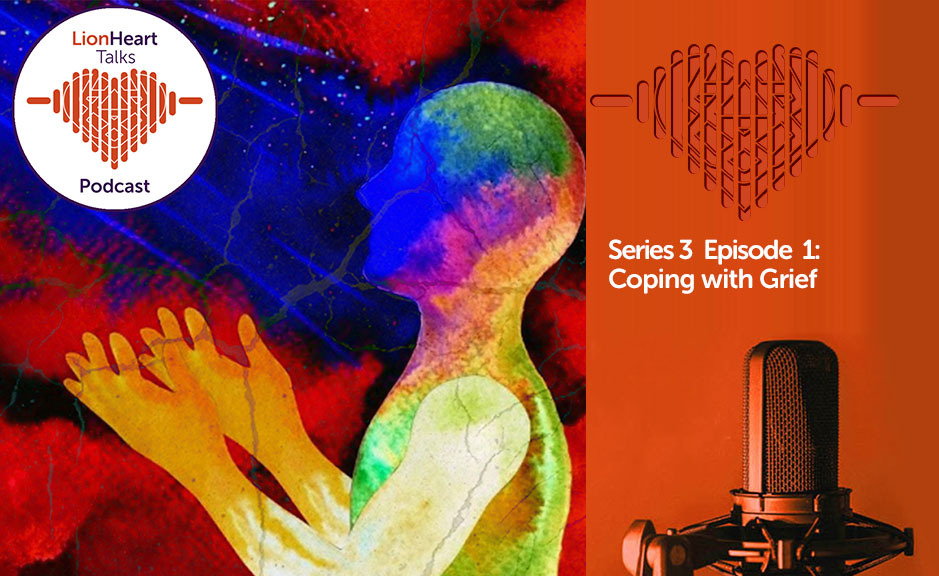
Two bonus episodes from the LionHeart Talks podcast, recorded to mark Grief Awareness Week. Hear from LionHeart staff and ambassadors on their experiences of grief and loss, including in the workplace.
Episode 1:
LionHeart Talks... Coping with Grief
Episode 2:
LionHeart Talks...Grief in the Workplace