
5 things you need to know as a new graduate surveyor

- So you're just starting out with a whole new career stretching out in front of you. Here are five key things I think you should keep in mind as a new graduate or trainee surveyor...
- 1. The first days and weeks – what are the must-have items?
One of the first things to get clear on when you start is what your employer expects from you. Dress codes can vary considerably between different areas of surveying and between different firms. A commercial surveyor or estates manager, for example, may still be expected to wear a suit and tie when meeting clients, whereas the dress code for a residential surveyor carrying out inspections may be much more practical.
The days of wearing a full suit and tie while climbing into roof spaces, lifting drain covers and crawling around subfloor areas as a residential surveyor have largely gone. Practical clothing and suitable footwear are far more appropriate for much of the work. However, you're still meeting clients, vendors and agents, and representing your employer (and wider profession), so there is a balance between being practical and looking professional.
Whatever area of surveying you are entering, your most important piece of equipment in those first few weeks isn't something you can buy. It's your attitude.
Be enthusiastic, be willing to learn and be prepared to put the work in. Listen to experienced surveyors and learn from them – there is a huge amount of practical knowledge that comes from being in the workplace, dealing with clients and learning how to approach problems.
You also need to be flexible if something unexpected comes up or priorities shift. It can be frustrating, particularly when it means a longer day, but flexibility is an important part of working in a client-focused profession.
So, make sure you understand the dress code and any practical requirements. But remember, in those first few weeks, your willingness to learn, your attitude and your ability to adapt will be far more valuable than anything you can buy.
- 2. Managing your wellbeing and work-life balance is important!
Starting a career in surveying involves a steep learning curve. A good employer won't simply throw you in at the deep end and expect you to perform like someone who has been surveying for ten years. Your workload should gradually build as your knowledge, confidence and competence develop and the priority should be doing the job correctly and professionally.
Even with reduced expectations around workload, it can still feel incredibly busy when you're finding your feet.
That's why the people around you are important. Get to know experienced surveyors in your team and don't be afraid to ask for help.
I think attitudes towards work-life balance have shifted over the years. While the ‘you're being paid well, so get on with it’ attitude may have softened, surveying remains a demanding profession and client expectations in an ‘Amazon Prime’ world can put pressure on firms and, ultimately, on surveyors to be productive, efficient and responsive.
Your wellbeing is particularly important in a pressured profession. Find something outside work that helps you switch off. For me, a lunchtime run is a great way of clearing my head, but that will look different for everyone.
A good employer should have appropriate support mechanisms; a supportive line manager, mental health first aiders, employee assistance programmes and other wellbeing resources.
LionHeart is a superb charity that provides RICS professionals with a brilliant range of support throughout your career – not just when things go badly wrong. So check out the confidential one-to-one support they offer, as well as webinars and other resources.
Don't wait until you're in crisis before asking for help. It is far better to identify a problem early and work out how to manage it than to allow it to become a much bigger problem.
- 3. Use networking effectively and learn from other people
If your aim is to progress your career, networking is important. Love it or hate it, LinkedIn is a useful tool. You don't have to become an influencer or start posting every day, but don't be afraid to put yourself out there. Follow people whose work interests you, engage with useful content and share things you have learnt.
There are also plenty of online communities for surveyors. Facebook groups, LinkedIn groups and other forums can be useful places to ask questions, see what other surveyors are experiencing and learn from people outside your own firm (but be mindful of client confidentiality and never share identifiable details, photographs, reports etc without appropriate permission).
Also bear in mind you’ll come across some fairly outspoken characters in these groups – but take what is useful, ignore what isn't and remember that nobody has all the answers.
Try to attend conferences and professional events when you can. RICS Matrics is particularly useful for younger professionals. These events give you the opportunity to meet people at a similar stage of their careers, as well as more experienced professionals. If you're naturally quiet or introverted, networking can feel uncomfortable but you don't have to walk into a room full of strangers and start handing out business cards - start small.
And don't overlook the people within your own organisation.
I learnt an enormous amount from my first mentor, who remains one of the best surveyors I have ever known, about how to approach problems, deal with clients and conduct myself as a professional – lessons that have stayed with me throughout my career.
Ask questions! There is no such thing as a stupid question. Even surveyors with decades of experience regularly come across something that makes them think, "I've never seen that before."
I have woken up many times (and still do) in the middle of the night worrying about whether I had got something right or whether I had made a mistake. Talking it through with a colleague or manager was often enough to put things into perspective.
If someone takes the time to give you feedback, don’t take it as personal criticism but try to understand what you can learn from it. Nobody expects you to get everything right when you start. What matters is that you are willing to learn.
Surveying really is a very small world. The connections you make and people you learn from early in your career can have a profound influence on the surveyor you eventually become.
- 4. Keep up with good practice
One of the great things about surveying today is the sheer amount of information available to you, from podcasts, newsletters, blogs and online communities covering almost every aspect of the profession. I follow content from building surveyors, valuers, builders, snagging companies and specialist contractors. More than 20 years into my career, I still learn things from them.
Don't forget the old-school stuff either and keep hold of your books… I still refer to books that I've had for years. Good reference material doesn't suddenly become irrelevant because it isn't online.
Most importantly, make sure you understand and regularly refer to the relevant RICS professional standards and guidance. Depending on your area of work, organisations such as BRE and CABE can also provide valuable technical information and guidance.
And don't forget to log your CPD. CPD shouldn't simply be about ticking a box at the end of the year to show you’ve done your 20 hours. It should be about keeping your knowledge current and identifying where you need to develop.
You also need to understand what is happening outside surveying.
The wider world has a direct impact on our profession, whatever area of surveying you work in. Geopolitical events can affect energy and material prices, supply chains and construction costs. These feed into inflation, interest rates, investment decisions, development viability, occupier demand and ultimately the wider property and construction markets. So, keep an eye on the news, but don't overdo it because sometimes it can all feel a bit overwhelming!
You need to develop the habit of looking ahead and asking: "What is coming next, and how might it affect my job?"
There are plenty of examples in residential surveying right now: the buying and selling consultation, changes to professional standards, sustainability requirements, building regulations, leasehold and commonhold reform and, of course, the rapid development of AI.
You don't need to become an expert in everything. But you do need to stay curious.
- 5. Avoid the ‘comparison trap’ if you’re part of a large cohort (and where to get support if you’re not)
My advice is simple: you do you.
Focus on your own learning journey and not what everyone else is doing. It is very easy to look at the person next to you and think they’re more knowledgeable, more efficient or more productive than you. Then the self-doubt starts to creep in. Does my boss think I'm a slow learner? Do they think I'm not good enough? Am I falling behind everyone else?
Much more useful questions to ask yourself in a few months are: What have I learnt? Am I more confident? Am I more productive? Am I more useful to my mentor and my team than I was when I started?
If the answer is yes, you're moving in the right direction.
When I was training, I'd look around at some of the other people in my cohort and listen to them talking about surveying. They sounded incredibly knowledgeable and confident, while I sometimes sat there thinking, "I don't really understand what they're talking about – but they certainly sound like they do!" It made me feel like an imposter.
Looking back now, I realise that some of those people didn't necessarily know as much as I thought they did. Some were simply very good at talking confidently about things they didn't fully understand! Don't confuse confidence with competence.
If you're working for a smaller firm, or you're the only trainee or newly qualified surveyor in your organisation, you may not have a large cohort of people around you who are going through the same experiences, so building your own wider network becomes even more important, as does leaning into the support that is available.
Ultimately, whether you're one of 20 trainees or the only one in your firm, remember that your career is your journey. You don't need to be the fastest learner in the room; you just need to keep learning, improving and moving forward.
And finally - good luck for your surveying career!
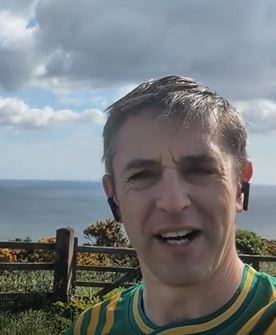
Adrian Drummond FRICS is head of Academy Services at SDL Surveying. A long-time supporter of LionHeart, he is now a volunteer ambassador for us.
Find out more:

Also from the Blog:
Using AI as an RICS APC candidate: where to draw the line?